
Flux 2 by Black Forest Labs: When Light Needs to Look Real
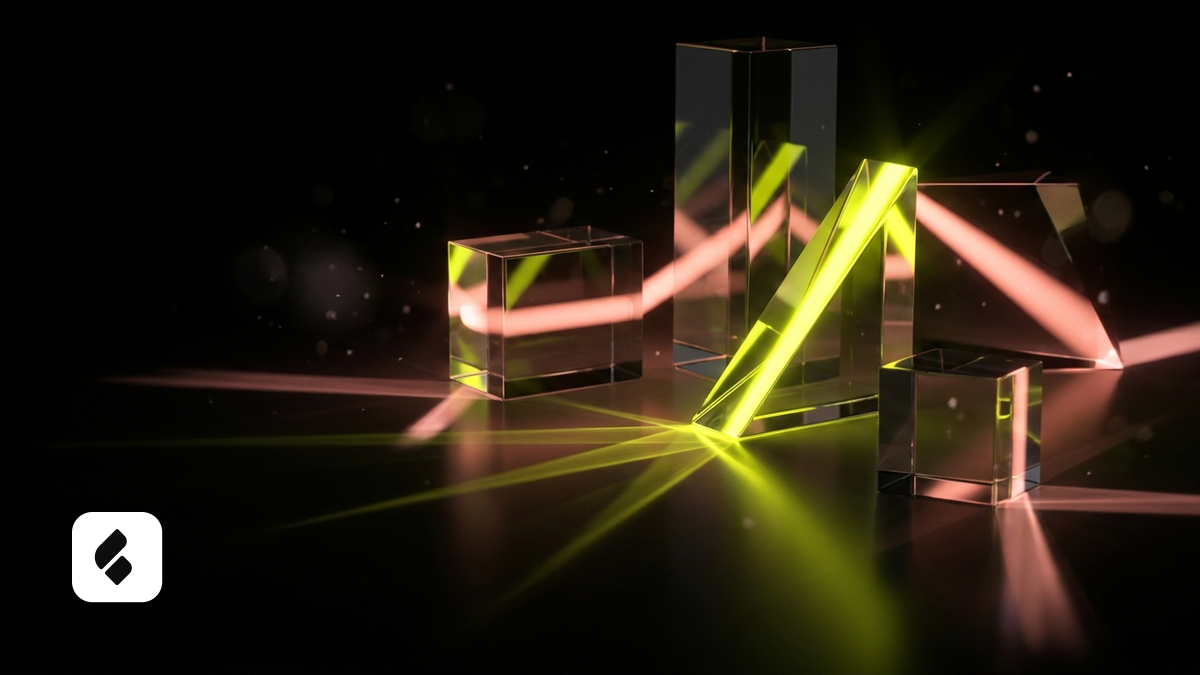
Flux 2 from Black Forest Labs: photoreal images up to 4MP, true lighting physics, consistent characters, exact brand colors. Pro, Flex, and Dev compared.
I'm Maya, art director at Flami. Images are my territory, and when it comes to photorealism, I usually pick between two or three models. Flux 2 is the one I open when a client sends their brand color as a HEX code and says "exactly this, not one shade lighter." Most models just shrug at that kind of request. Flux holds the line.
I'll walk through where it genuinely shines and where I skip it for something else. No sponsored angle here, I use this model nearly every day.
Where it comes from and what's new
Flux comes from Black Forest Labs, the team behind Flux 1, the model that was everywhere in AI-generated images back in 2024. The second version launched in November 2025, and it wasn't a cosmetic update. The architecture got rebuilt.
The core promise is simple: kill the "AI look."
> "FLUX.2 images read as photorealistic even at scale; real-world light and physics remove that telltale AI feel." - Flux 2 announcement breakdown, Black Forest Labs
The focus isn't on making things pretty. It's on making a frame read like a photograph rather than a generation. And that's exactly where this model has leveled up.
What I like about it
Light behaves the way it should, and that's the first thing you notice. Light falls the way it should, shadows match the source, and reflections on glass or metal behave the way they do in real life. When you're shooting a perfume bottle or a watch, those reflections are what give away a fake, and Flux handles them more carefully than most models I've tried.
Exact brand color comes next. Drop a HEX code right into the prompt and the model reproduces it almost pixel for pixel. For brand campaigns where the shade is locked in a style guide, that's not a nice-to-have, it's a requirement. This alone has saved me a lot of stress.
Keeping one subject consistent across an entire series is something I rely on it for too. Upload reference images of a face or a product, and Flux keeps that identity consistent through different scenes: the background, lighting, and pose all change, but the face or product design stays recognizable. According to the official description of the dev version, the model pulls its output from multiple reference sources, up to ten images. In Flami's interface you get up to eight, which is plenty in practice. This solves that familiar headache of a face shifting slightly in every frame of a shoot.
Under the hood, for the curious
Skip this part if the technical details aren't your thing.
The open dev version of Flux 2 is a 32-billion-parameter rectified flow model, paired with Mistral-3, a 24-billion-parameter vision-language model. Roughly speaking, one part reads your prompt as text, the other part draws. That combination is why Flux handles long, layered prompts without losing the thread.
There's also a build optimized for running locally on NVIDIA GPUs. If you're running the model on your own hardware, that matters a lot. Through a service like Flami it doesn't matter at all, but it's good to know it's there.
Pro, Flex, and Dev
Black Forest Labs shipped a full lineup, including Pro, Flex, Dev, and heavier variants. In Flami we run three of them:
- Pro. The main production version, fast and reliable, covers most jobs.
- Flex. Gives you manual control over step count and refinement, slower but sharper when you need to push quality further.
- Dev. The open version for your own servers, under a non-commercial license, worth knowing if you're running a business.
I reach for Pro about 80% of the time. Flex comes out when a shot is headed for print or a big screen.
Resolution and generation time
Images go up to 4 megapixels, roughly 2K and above. Seven aspect ratios are available, from a square for Instagram to a tall frame for Stories and a wide one for banners.
On timing: Pro returns a result in about 10 to 15 seconds. Flex can take up to 40 seconds because it runs more steps. Not instant, but a fair tradeoff for the quality bump.
Flux 2 vs. Nano Banana
People ask me this more than anything else, so here's my honest take.
For realistic light, materials, and texture, I reach for Flux 2. It's also my pick for matching an exact brand color from a HEX code and for keeping one character consistent across a series of shots. When the job calls for readable text or typography inside the frame, I switch to Nano Banana or Ideogram 3.0. For a complex scene that needs genuine contextual understanding, Nano Banana usually wins.
Short version: Flux is about how the frame looks and what the light is made of. Nano Banana is about what's written in the frame and how cleverly the scene is put together. I often use them together, building the realism in Flux and finishing any on-package text in Nano Banana.
Honestly, on some genre scenes I still can't call a clear winner. I run both and pick by eye. That's fine. There's no single right answer here.
Should you use Flux 2? A quick checklist
- ✓ You need photorealistic product shots without that AI look
- ✓ An exact brand color matters
- ✓ You need one character or product to stay consistent across a series
- ✗ Text and typography are the main point of the image, go with Ideogram or Nano Banana instead
- ✗ You need a strict layout like "logo on the left, product centered," GPT Image 2 is more precise there
What I'm testing next
I'm working on breakdowns of Imagen 4, Ideogram 3.0, and Seedream 5.0. I also want to run Flux 2, Nano Banana, and Imagen 4 on identical prompts side by side and show the actual difference.
You can try Flux 2 at Flami, with free starter credits when you sign up.
FAQ
What is Flux 2?
What's the difference between Pro, Flex, and Dev?
What resolution does it support?
Flux 2 or Nano Banana?
Can I set an exact brand color?
Does it handle text well?
Can I try Flux 2 through Flami?
Sources
- Flux 2: Black Forest Labs announcement breakdown
- Flami: Flux 2 product page
- Flami: AI image generation
About the author
Megan Brooks
Reviewer at Flami